Employee Experience
90 Performance Review Comments for Every Competency (2026)
Learn how to comment on a colleague's performance along with examples and tips for proper and constructive feedback.

TRUSTED BY BEST-IN-CLASS BRANDS


Watch Customer Stories

Performance reviews carry more weight than most managers realize. For many employees, it is one of the few formal moments in the year where they receive a structured assessment of their work. That makes what gets said, and how it gets said is genuinely consequential.
62% of employees report feeling completely blindsided by one or more of their evaluations. That is not a signal of employees being overly sensitive. It is a signal that honest performance conversations are not happening consistently throughout the year.
And research from Adobe found that 80% of office workers would prefer to receive feedback immediately rather than waiting for a scheduled review.
So the appetite for honest, timely performance conversations is clearly there, but the gap is in the way its delivered.
When feedback is withheld during the year and concentrated into a single annual event, managers feel pressure to cover twelve months of observation in one sitting. The result is comments that are either too vague to be useful or too blunt to land well.
The most effective comments are not written the week before the employee's performance review. They reflect a year of honest observation, specific examples, and ongoing dialogue. This guide gives you the language to write comments that are constructive, fair, and genuinely useful.
How to Write Performance Review Comments
Writing performance review comments that are fair, specific, and genuinely useful is harder than it looks. Most managers know what they want to say — the challenge is saying it in a way that lands well and actually changes something.
These principles make the difference.
Start with a specific observation, not a general judgment. "You struggle with communication" tells an employee nothing they can act on. "Your project updates have been difficult for stakeholders to extract decisions from" tells them exactly where to focus.
Connect the observation to its impact. A comment without impact is just an opinion. Pairing what happened with what it meant for the team, the project, or the customer gives the employee a reason to change — not just a direction.
Balance recognition with development. A review that only covers gaps demoralizes. One that only covers strengths misleads. The most effective comments acknowledge what is working before addressing what is not.
Write the comment you would be comfortable saying out loud. If you would hesitate to deliver a comment face to face, it is a signal to rewrite it. The best performance review comments are direct enough to be useful and considered enough to be fair.
Be specific about what improvement looks like. Telling someone to "communicate better" is not feedback — it is a direction without a destination. The comment should include what better looks like in practice, even if only briefly.
Separate the person from the behavior. Comments grounded in observable behavior are easier to receive and act on than those that feel like character assessments. "There were instances where deadlines were missed without early notice" is more productive than "you are unreliable."
Use the review to set up the next cycle, not just document the last one. The most useful comments point forward. Ending with what you want to see in the next period gives the employee something to work toward rather than just a record of where they fell short.
90 Performance Review Example Comments & Phrases
The overall appraisal comments mentioned on the document should be more than just a few lines; they should be specific and detail-oriented.
Here are a few examples of effective overall performance review comments for different aspects of employee KPIs, and competencies.
Related: Performance goals examples for organizations
1. Interpersonal effectiveness
The ability to work well with others is no longer a soft skill, but a core performance competency. In most organizations today, individual output depends on the quality of the relationships surrounding it. An employee who creates friction, withholds information, or struggles to collaborate effectively limits not just their own performance but the performance of everyone around them.
Conversely, someone who builds trust, communicates openly, and makes colleagues feel valued has a multiplying effect on the team.
Use these comments when evaluating how effectively an employee contributes to the working environment around them.
Positive
- You bring people together around a shared goal even when priorities conflict, and that skill has made a measurable difference to how cross-functional projects run.
- Colleagues consistently describe working with you as a positive experience — a reputation that reflects how consistently you show up for the people around you.
- You have built genuine trust across teams that goes beyond your immediate role, and people come to you because they know you will be straight with them.
- You create an environment where people feel comfortable raising concerns and sharing ideas, and that openness has led to better decisions this year.
Constructive
- There have been instances where communication gaps affected team output — building a more consistent habit of keeping colleagues informed would make a meaningful difference.
- Your technical contribution is strong, and investing more in the relationship side of your work would amplify that impact significantly.
- Your perspective adds value, but you do not always share it in group settings — engaging more actively in team discussions would increase your influence on outcomes.
ThriveSparrow lets you rate your team at ease, and get a visual overview of key strengths and blind spots, perfect for managers to create personal development plans and PIPs.
Tie performance review comments to sentiment analysis and performance reports. Sign up to ThriveSparrow (Our EX Platform) for FREE.

Explore how ThriveSparrow can transform your feedback process
TRUSTED BY BEST-IN-CLASS BRANDS
2. Communication skills
Clear communication is one of the most direct drivers of team performance. When expectations are set clearly, updates are shared proactively, and feedback is delivered with care, the work moves faster and with less friction. When communication breaks down, even technically strong work can create problems like missed deadlines, misaligned priorities, and colleagues who feel uninformed or undervalued.
Use these comments when evaluating how effectively an employee communicates across written, verbal, and cross-functional contexts.
Positive
- Your project briefs are clear, your updates are concise, and colleagues consistently know where things stand without having to ask.
- You adjust your communication style to suit the audience without losing the substance of what you are saying, whether that is a technical colleague or a senior stakeholder.
- You address issues directly and constructively rather than letting them sit, and that willingness to have difficult conversations early has prevented several situations from escalating.
- You keep people informed without over-communicating — a balance that is harder to strike than it looks and you maintain it consistently.
Constructive
- Project requirements were communicated late or incompletely on several occasions this year, creating rework that a more consistent briefing process would prevent.
- Written updates have been difficult to act on at times — leading with the main point or key decision would make your communication significantly easier to use.
- Important updates are sometimes shared verbally without follow-up documentation, and a brief written summary after key conversations would close that gap.
Performance review comments are one part of a complete picture. They capture what a manager observes and what colleagues experience. But they do not tell you how an employee rates themselves, how their competencies compare across the team, or where the gaps between self-perception and peer perception are widest.
That gap is where the most useful development insights live, and it is exactly what a structured 360-degree review surfaces.
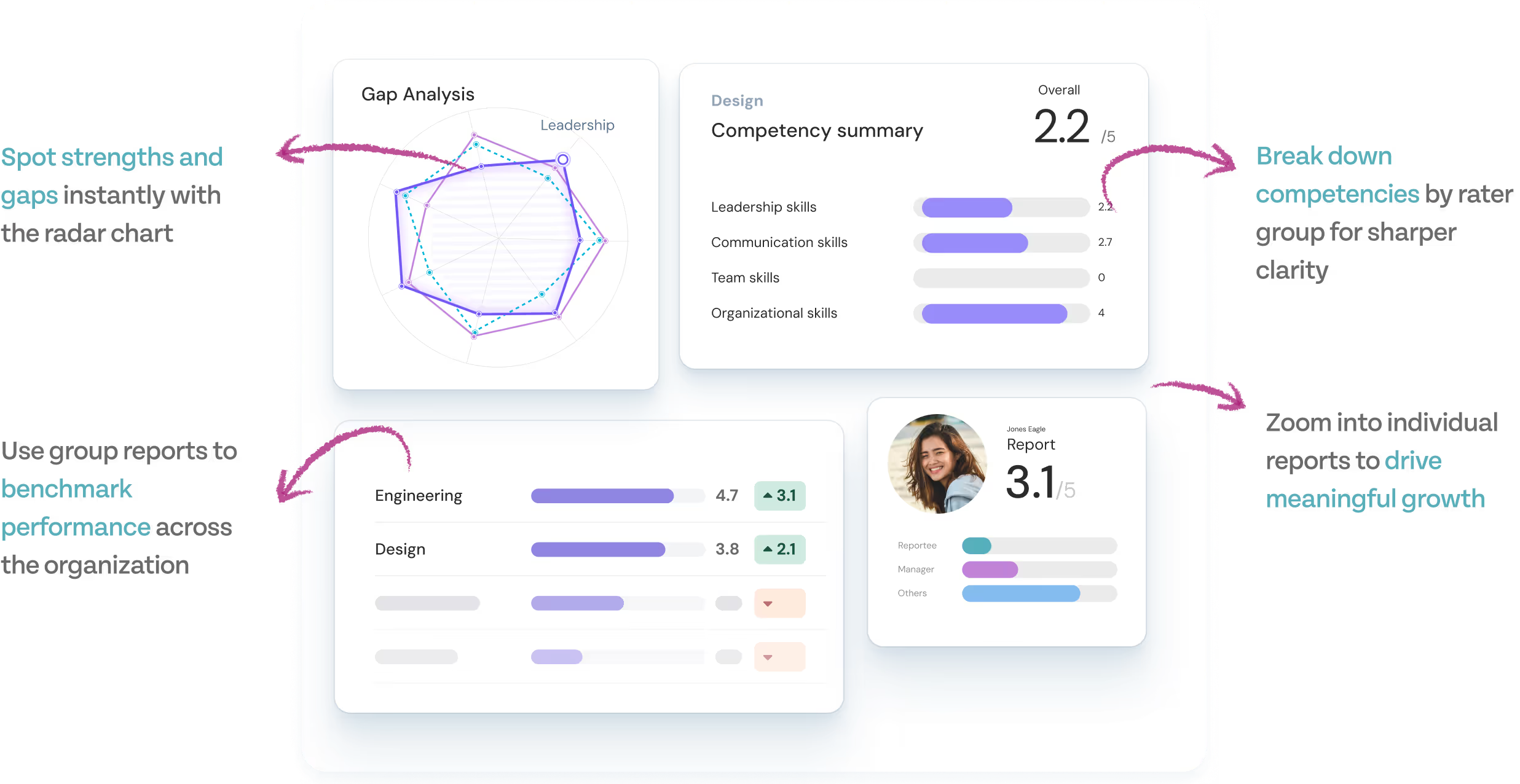
ThriveSparrow's 360-degree feedback platform gives managers and HR teams a complete view of employee performance across competencies, feedback sources, and review periods. Competency scores, self-assessments, peer ratings, and manager evaluations are brought together in a single report, giving you the context to write performance review comments that are grounded in data rather than impression.
The result is a review process that is fairer, more consistent, and more useful for the people on the receiving end of it.
Run Your First 360-Degree Review, and Get Access to the Entire Feedback Report
TRUSTED BY BEST-IN-CLASS BRANDS
3. Problem-solving ability
Every role, at every level, involves problems. What separates strong performers is not the absence of obstacles but the quality of their response to them. The ability to diagnose a problem accurately, consider the right options, and make a sound decision under pressure is one of the most valuable competencies in any organization. It is also one of the hardest to develop and one of the easiest to overlook in a performance review if comments stay at the surface level.
Use these comments when evaluating how effectively an employee identifies, approaches, and resolves problems across their work.
Positive
- When a critical issue threatened the Q2 delivery timeline, you identified the root cause within 24 hours and had a solution in place before most of the team knew there was a problem.
- You consistently think through the downstream consequences of a decision before committing to it, and that habit has prevented several situations from becoming compounding problems.
- You arrive at difficult conversations not just with the problem identified but with a thought-through alternative the team can actually act on.
You bring a structured, calm approach to complex problems that gives the team confidence when things are uncertain — and you have delivered consistently in those moments.
Constructive
- Solutions have gone live this year and created problems downstream — spending more time on edge cases and second-order effects before committing would reduce that pattern.
- The instinct to move quickly has sometimes come at the expense of diagnosing the root cause first, and problems addressed at the symptom level tend to resurface.
- Some decisions this year would have landed better with input from the people closest to the work — bringing the right context into the room before the call is made produces more durable outcomes.
4. Coaching
The best managers deliver results through their team, and they help the team perform better than before.
A manager's real impact is not measured by what they achieved, but it is measured by what the people around them went on to achieve. Organizations that take succession seriously evaluate not just what a manager achieved this year but how much stronger the people around them are as a result of working with them.
Positive
- Three of your direct reports took on significantly more responsibility this year and all three delivered — that does not happen without someone actively creating the conditions for it.
- You identify what each person on your team needs and adjust your approach accordingly, and that precision has accelerated development across the team.
- You handle underperformance early and constructively, giving people a real opportunity to turn things around before it becomes a formal issue.
- Several team members have said that working with you has accelerated their development in ways they did not expect — feedback that only comes from someone who takes the responsibility seriously.
Constructive
- Development conversations tend to happen reactively rather than on a consistent schedule — a regular monthly one-on-one would give your team useful guidance throughout the year, not just when something goes wrong.
- Some team members have been ready for more responsibility for a while, and advocating for them more actively in the right conversations is an important part of the role at your level.
- Most of the feedback your team receives comes at review time — a brief conversation in the week something happens is far more useful than the same feedback delivered months later.
5. Creativity and Innovation
The way things have always been done is not always the best way to do them. The employees who spot that gap and do something about it are the ones who move organizations forward.
Creativity in a professional context is not about being unconventional for its own sake. It is about bringing a fresh perspective to a real problem and having the conviction to act on it even when the outcome is uncertain.
Use these comments when evaluating how effectively an employee brings original thinking and new ideas to their work.
Positive
- The solution you proposed for our client reporting process in Q2 saved the team roughly four hours a week and has since become the standard approach across the department.
- You bring a perspective to team discussions that shifts the conversation in a useful direction — not just identifying what is wrong but arriving with a workable alternative.
- When the project brief changed significantly midway through, you came back with a rethought approach that was stronger than the original.
- You introduced two initiatives this year that measurably improved how the team works — neither was asked for, and both are still running.
Constructive
- The ideas you share in passing conversations are often stronger than what makes it into your formal work — backing those ideas with the same effort you put into core deliverables would increase their impact.
- The instinct to reach for a proven approach has sometimes closed off stronger alternatives — building a habit of questioning the method before committing to it would produce better outcomes in ambiguous situations.
- Strong ideas have been raised this year without follow-through — coming in with a rough plan alongside the idea would make it much easier for the team to get behind them.
6. Delegation
Delegation is one of the most misunderstood management skills.
If it's done poorly, it will look like offloading - work that lands on someone without context, support, or a clear definition of success. Done well, it is one of the most powerful development tools available. It frees up a manager's capacity for higher-leverage work, builds the confidence and capability of the people receiving the work, and signals genuine trust in the team.
Use these comments when evaluating how effectively a manager or senior employee delegates work to others.
Positive
- You match the right work to the right person consistently — assignments are calibrated to stretch people without setting them up to fail.
- When you hand work off, you provide the context, resources, and access people need to succeed, and you check in without hovering.
- Three team members took on more complex work this year than they had before because you created the opportunity, backed them publicly, and gave them room to own it.
- You are clear about what you are delegating and what success looks like before the work begins, which means people can get on with the job rather than guessing.
Constructive
- There is a tendency to hold onto work during busy periods rather than passing it on — it feels faster in the moment but costs the team development opportunities and concentrates too much in one place.
- When work is delegated, the brief has sometimes been too thin for the person receiving it — a few extra minutes at the handover stage covering context and expected outcomes saves significantly more time later.
- Work has been taken back before the person had a real chance to complete it — letting someone work through a problem, even imperfectly, is where the actual development happens.
7. Learning ability
The half-life of skills is shrinking. What made someone effective in their role three years ago is not necessarily what will make them effective three years from now. The employees who consistently add value over time are not necessarily the most talented, they are the ones who stay curious, seek out new challenges, and apply what they learn quickly enough to make a difference. A genuine commitment to learning is one of the clearest signals of long-term potential.
Use these comments when evaluating how effectively an employee invests in their own development and applies new knowledge to their work.
Positive
- You identify your own learning gaps, find the resources, and come back with something the team can use — that kind of self-directed development is rare and genuinely valuable.
- When a new platform was introduced mid-year, you were the first to get to grips with it and the first to help others do the same.
- You consistently take on work that stretches you beyond your current capability, and the rate at which you apply what you learn is impressive.
- You share what you learn — through articles, informal sessions, or simply walking a colleague through something you have figured out — and that actively raises the team's capability.
Constructive
- A lot has changed in your area this year and there is a gap in keeping pace with it — seeking out ways to learn independently rather than waiting for formal training would close that gap faster.
- Feedback has been shared consistently this year and you receive it well — the area to work on is acting on it more quickly, because the value of feedback is in what changes as a result.
- There have been opportunities this year to take on new challenges that were left on the table — the foundational skills are solid, and the next step is building on them deliberately.
8. Attendance and Reliability
Attendance is one of the more sensitive areas to address in a performance review because the reasons behind it are not always within an employee's control. Illness, personal circumstances, and family commitments are real and deserve to be treated with care. At the same time, patterns of absence or lateness that affect the team's ability to plan and deliver need to be addressed honestly and early, not just saved for a formal review where there is little opportunity to course-correct.
Use these comments when evaluating an employee's reliability, punctuality, and presence as it relates to their role and the team around them.
Positive
- Your reliability this year has been exceptional — the team always knows where you are, when you will be available, and what to expect from you.
- You manage your time and attendance with a professionalism that sets a strong example, and you communicate proactively on the rare occasions something changes.
- When personal circumstances required you to adjust your schedule, you handled it with complete transparency, kept your commitments covered, and minimized the impact on the team.
Constructive
- There have been instances where meetings started without you or had to be pushed back without notice — a brief message beforehand makes it much easier for the team to plan around it.
- There have been occasions where your unavailability at expected times created delays on work that depended on your input — more consistent communication about availability would make a real difference.
- The pattern of absences this year has made it difficult for the team to plan consistently, and this is something we need to work through together in a separate conversation.
9. Time Management
How someone manages their time is one of the clearest indicators of professional maturity. It is not just about meeting deadlines — it is about making deliberate choices under competing demands and protecting the most important work from the least important noise.
Positive
- You manage competing priorities with a consistency the team relies on — when two urgent deadlines landed in the same week, you triaged clearly, communicated what was possible, and delivered without compromising either.
- You flag potential delays early enough that the team has time to adjust without it becoming a crisis — catching problems at the planning stage is a skill not enough people develop.
- You protect focused time without becoming unavailable, and you rarely let urgent requests derail work that was already planned.
- Your commitments are reliable because you build in enough buffer to absorb the unexpected — that kind of planning discipline has a compounding effect on the team's confidence in you.
Constructive
- Work has tended to arrive at the deadline rather than before it, leaving no room for review — building earlier internal milestones into your planning would improve the quality of what is submitted and reduce the pressure at the end.
- When unexpected requests arrive, the response has sometimes been to absorb them without adjusting existing commitments — being more direct about what needs to shift when something is added would make your workload more manageable and your commitments more reliable.
- Some recurring tasks and meetings are consuming more time than the value they return — auditing your calendar to identify where that time could be redirected would meaningfully improve your capacity for higher-priority work.
10. Adaptability
The pace at which priorities, tools, and team structures change means adaptability has become a core competency, not a secondary one. Employees who absorb change quickly and help others navigate uncertainty are disproportionately valuable to any team.
Positive
- When the project roadmap was reprioritized at short notice, you had a revised plan to the team within a day and the disruption cost us less than a week — that kind of response under pressure is what resilience looks like in practice.
- You actively seek out change rather than waiting for it to be introduced, and when you identified a process that was no longer working, you proposed and implemented a replacement before most people had noticed the problem.
- When a key tool was discontinued mid-project, you found and onboarded an alternative in three days without stopping the work — the team barely noticed the disruption.
- During a difficult period of uncertainty, colleagues came to you for steadiness, and you kept the focus on what the team could control without minimizing what was happening.
Constructive
- When priorities shift without much notice, the initial response has been to wait for more clarity before acting — working on making a provisional call and adjusting as more becomes clear would serve you better in fast-moving situations.
- The adjustment period when something changes tends to run longer than the role requires — getting to a working position faster, even an imperfect one, would make you more effective during transitions.
- There is an opportunity to be a more active stabilizing force for the team during uncertain periods — your own adaptation has improved this year, and the next step is helping others navigate change as well.
11. Technical Skills and Job Knowledge
Technical competence is the foundation on which everything else is built. What separates strong performers is not just what they know — it is how effectively they apply that knowledge to real problems and raise the capability of the people around them.
Positive
- When a critical integration failed the night before a client presentation, you diagnosed and resolved it independently — the presentation went ahead without the client knowing anything had gone wrong.
- You built an automated process this year that replaced a manual task the team was doing every week, and the time saved has been redirected toward higher-value work.
- When a junior colleague kept running into the same category of problem, you spent two hours walking them through the underlying logic — they have not needed to come back since.
- You flagged a vulnerability in our data pipeline that had gone unnoticed for months — identifying it before it caused a problem reflected both technical depth and the standard you hold yourself to.
Constructive
- There are areas within your technical scope where the team currently absorbs work that should sit with you — identifying those gaps and building a structured plan to address them over the next quarter would be a meaningful step.
- Technical outputs have required more revision cycles than expected this year — building a personal checking step before submitting work would reduce the back-and-forth and improve first-pass quality.
- Much of the institutional knowledge you carry about how our systems work currently lives only with you — documenting the key processes at even a summary level would reduce that risk and be a lasting contribution to the team.
12. Work Quality
The standard of work an employee consistently produces is one of the most fundamental things a performance review needs to address. Accuracy, thoroughness, and the care applied to outputs before they leave someone's hands directly affect the team's confidence and the organization's credibility.
Positive
- Your work arrives complete, and the revision rate on your outputs has been the lowest on the team this year.
- You apply the same level of care to routine work as you do to high-visibility deliverables, and that consistency is rarer than it should be.
- When you identified a discrepancy in a client report before it was distributed, you flagged it, traced it to its source, and proposed a check to prevent it recurring.
- The quality of your documentation has made it significantly easier for colleagues to pick up projects you have worked on — that care creates lasting value beyond the immediate deliverable.
Constructive
- Several deliverables this year required more revision cycles than they should have — building a consistent self-review step before submission would catch most of the issues earlier and reduce the rework.
- Outputs have been thorough on the main elements but incomplete on the edges — follow-up items, formatting, supporting documentation — and those details affect how the work is received.
- Quality has been inconsistent under time pressure — building the review step into your time estimate rather than treating it as optional would produce more reliable results across the full range of situations you work in.
13. Initiative and Ownership
The employees who make the most impact are rarely the ones who do exactly what is asked of them. They are the ones who notice problems before they are flagged, volunteer before they are directed, and follow through without needing to be reminded.
Positive
- When a gap appeared in the team's coverage, you stepped in without being asked and managed both workstreams for six weeks until we had the right resource in place.
- You identified a process inefficiency, proposed a solution, built the case for it, and implemented it after getting the go-ahead — no one asked you to find that problem.
- Your manager has never had to chase you for a status update — you proactively share what is happening, what is at risk, and what you are doing about it.
- You do not wait for permission to improve things — when you see a better way, you raise it, and when the idea is accepted, you follow through.
Constructive
- The work assigned to you is completed reliably, but there is an opportunity to bring a more proactive eye to what is happening around you — identifying adjacent problems without waiting to be asked would expand your impact and signal readiness for more responsibility.
- Follow-through on smaller commitments made in meetings and conversations has been inconsistent this year — building a system for capturing those in the moment would make your word more reliable across all levels of the work.
- When something has gone wrong, the pattern has been to wait to see if it resolves itself — developing a lower threshold for surfacing issues early would give the team more options and protect you from being associated with delays that were already developing.
How Not to Write Performance Review Comments
Performance review comments carry more weight than most managers realize. A poorly worded comment does not just fail to help; it can actively damage an employee's confidence, their relationship with their manager, and their motivation going into the next review period.
The problem is not always intent. Most managers who write blunt or vague comments are not trying to be unkind. They are pressed for time, working through a long list of employees, and defaulting to shorthand that feels efficient in the moment. What they do not always consider is how that shorthand lands on the other side.
A colleague of ours, a designer, received a comment in his annual review that said something close to: "Needs to multitask more." Four words. No context, no example, no suggestion of what better would look like.
He spent days replaying it, questioning his work, and wondering whether his peers had lost confidence in him entirely. The comment was not meant to be harsh. But because it offered no path forward, it had nowhere to go except inward.
That is the core problem with unconstructive feedback. It tells someone they have fallen short without providing any guidance on how to close the gap. And when that feedback arrives in a formal performance review, a document that influences pay, promotion, and career trajectory, the stakes are high enough that vague criticism does real damage.
Constructive feedback does two things. It describes the gap clearly and specifically. And it points toward what improvement looks like. Without both, a comment is not feedback; it is a verdict.
| Don't write this | Write this instead |
| "Does not encourage the team to find creative solutions." | "There is an opportunity to create more space for the team to bring their own ideas to the table. Starting meetings with an open question before presenting a solution would be a good first step." |
| "Fails to communicate with team members effectively." | "There have been instances this year where colleagues were not kept informed about project progress in time to act on it. Building a habit of a brief weekly update, even a few lines would address this directly." |
| "Frequently shifts responsibility onto others." | "When things have not gone to plan this year, the tendency has been to look outward rather than inward. Taking ownership of outcomes is an important part of building trust with the team." |
| "Does not encourage open dialogue and sharing of perspectives." | "Team discussions would benefit from more deliberate space for different voices. Actively inviting input from quieter members before moving to a decision would make a real difference to how included the team feels." |
| "Lacks creativity in design output." | "The work meets the brief consistently but there is room to bring more originality to the concepts at an early stage. Spending more time in the exploratory phase before moving to execution would open up stronger creative directions." |
| "Makes hasty decisions without considering factors." | "There have been moments this year where decisions were made quickly and needed to be revisited once more information came in. Taking a short pause to identify what else might be affected before committing to a direction would improve the durability of those calls." |
| "Fails to acknowledge others' contributions to success." | "Recognizing the role colleagues play in shared outcomes in team settings and in written updates would strengthen working relationships and reflect more accurately how the work actually gets done." |
| "Struggles to complete tasks due to ineffective time management." | "There have been instances this year where deadlines were missed or required last-minute escalation. Working with a more structured weekly plan, and flagging potential delays earlier would give the team more time to respond and support where needed." |
What Should Managers Keep in Mind During an Employee's Performance Review?
Writing a performance review that is fair, useful, and genuinely motivating requires careful consideration of 12 must-dos.
1. Run a SWOT analysis on their performance
A SWOT analysis (Strengths, Weaknesses, Opportunities, and Threats) is a technique used to help organizations when drafting a business strategy. Before writing a single comment, map out the employee's Strengths, Weaknesses, Opportunities, and Threats.
2. Review their previous performance
If the employee has been with you for many years, you can get the overall performance review comments from the past years. It will give you an idea of how they were performing earlier. If there was a marked improvement or decline, you could discuss it and see why it happened.
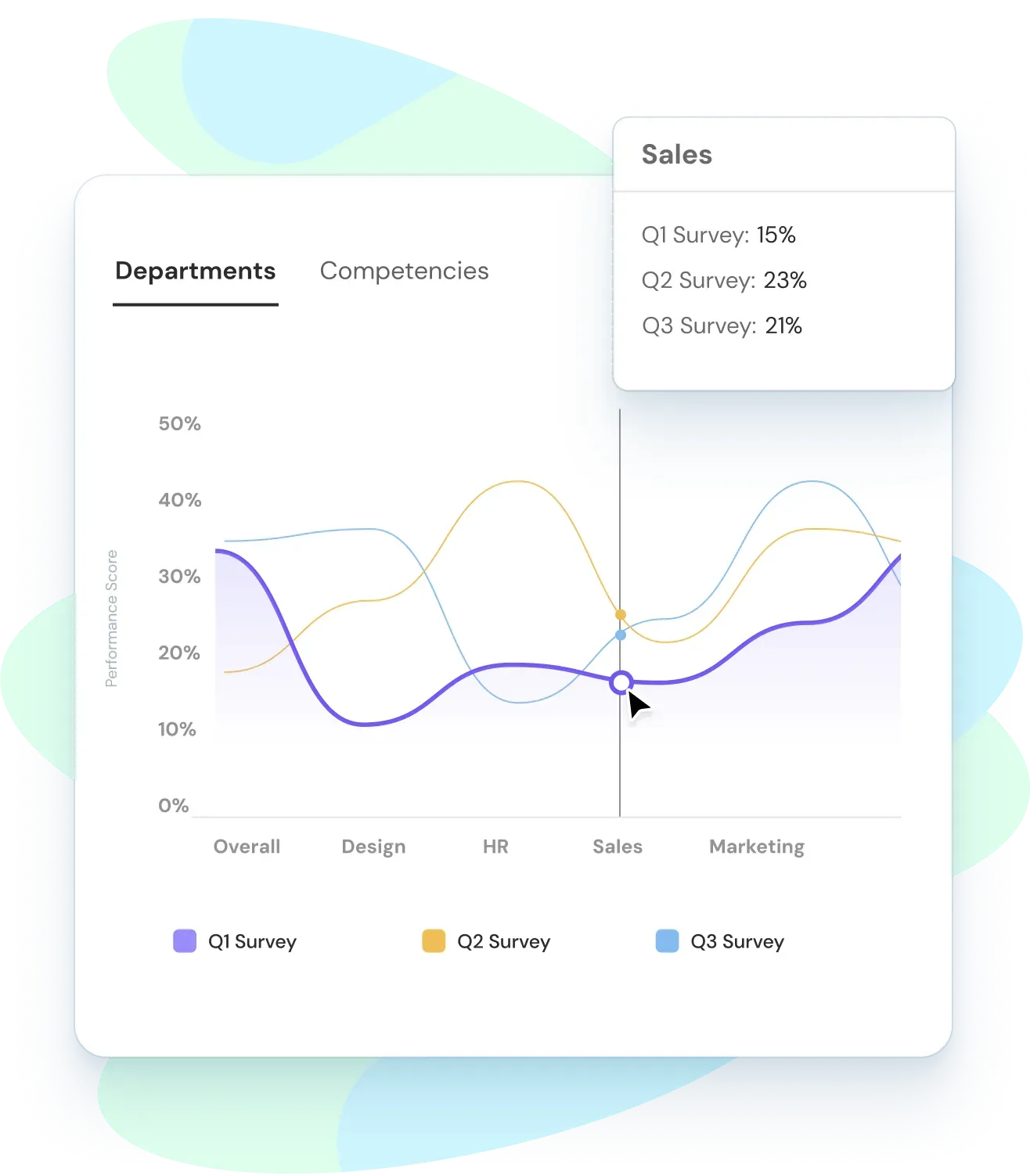
See how ThriveSparrow can help you oversee the entire review process
TRUSTED BY BEST-IN-CLASS BRANDS
Apart from providing yearly feedback, the organization or the manager should also provide regular feedback to the employees. It could be overall comments on goal achievement or even a casual remark on how they could accomplish something specific.
3. List out areas that need improvement
Employees cannot fix what they cannot see. Part of your job as a manager is to surface the blind spots clearly and specifically. Vague observations such as "needs to improve communication" give the employee nothing to act on. Name the specific situation, the specific impact, and what better would look like. Help them build relevant skill sets to ensure that they are up to the task of achieving them.
4. Make the feedback constructive
A review that only surfaces negatives demoralizes people. Whereas, a review that only surfaces positives does not develop, it could be a misleading factor. The most effective reviews balance both together.
Acknowledge what is working, address what is not, and make sure every critical observation comes with a direction for improvement. Negative reinforcement without a path forward is not feedback. It is criticism.
Ensure there is no room for any bias to creep in. Not dwelling on the personal attributes of your employees; that is how you will be able to provide constructive feedback.
5. Be transparent
Employees need to trust that what they are reading is honest. If you have been withholding concerns throughout the year and surfacing them all at once in a formal review, the review will feel like an ambush rather than a conversation.
Make sure that you are transparent and unbiased in all your dealings with the employees. As soon as you figure out that an employee performs below expectations, you should have a mechanism to address it. Let your employee know what you are expecting from them and show them how they can accomplish it.
Saying what you actually think in a constructive manner will work well.
6. Choose the right words
Words in a performance review carry more weight than words in almost any other professional context. A comment that takes you thirty seconds to write can stay with an employee for months. Before you finalize a comment, ask yourself whether it describes something specific, whether it points toward improvement, and whether it is something you would be comfortable saying directly to the employee in a conversation. If the answer to any of those is no, rewrite it.
7. Set SMART goals for them
The review is not just a retrospective, but it is also the starting point for the next cycle. Use it to set goals that are Specific, Measurable, Achievable, Relevant, and Time-bound (SMART). Vague goals like "improve your communication" give the employee no way to know when they have succeeded. A goal like "send a written project update to all stakeholders every Friday by 5pm for the next quarter" gives them something concrete to work toward and something you can both assess at the next review.
8. Provide examples
Like we discussed earlier, every significant observation in a review should be grounded in a specific example.
An employee who hears "you struggled with prioritization this year" has to guess what you mean. An employee who hears "in Q3, when the two projects overlapped, the lower-priority work consistently pushed the higher-priority work back by several days" knows exactly what you are referring to and can reflect on it honestly.
9. Keep growth at the center
The purpose of a performance review is not to document the past — it is to improve the future. Even where the review covers significant shortfalls, the focus should be on what is possible rather than what went wrong.
Employees who leave a review feeling that their manager believes in their potential are significantly more likely to act on the feedback than those who leave feeling judged and written off.
10. Stay professional
The review is not the place to settle old scores, express frustration, or let personal dynamics influence professional assessment.
Whatever the relationship between you and the employee, the review should read as if it were written by someone who has never met them personally and is assessing only the work. That standard of objectivity is what makes a review credible and fair.
11. Acknowledge accomplishments with evidence
It is easy to focus on gaps during a review and gloss over achievements with a brief positive comment at the start.
Resist that.
Accomplishments deserve the same specificity as areas for improvement. Name the project, the outcome, the impact. Employees who feel their contributions are genuinely seen and understood are more engaged, more loyal, and more receptive to the harder parts of the feedback that follows.
12. End on a positive note
Regardless of employee appraisals, the manager should ensure that the performance review ends on a positive note. There should always be a silver lining at the end of the tunnel; that’s how the performance review should end.
At the end of the overall performance review comments, make a few positive comments about the employees based on their performance. Do remember that the main objective of this exercise is to improve the performance of the employee, assess where they stand right now and see if you can provide adequate resources to put them in a position to accomplish the goals in the next quarter/year.
Wrapping Up
Writing performance review comments that are fair, specific, and genuinely useful is one of the more demanding things a manager does. Even when the feedback is well-considered and carefully worded, employees will sometimes receive it differently than it was intended. That is not a reason to write less honest reviews, it is a reason to write better ones.
The quality of a performance review is ultimately a reflection of the quality of the relationship that preceded it. Managers who give regular, informal feedback throughout the year find that the formal review is rarely a surprise to anyone in the room. Managers who save everything for the annual review find that no amount of careful wording fully compensates for twelve months of silence.
The phrases and frameworks in this guide give you a strong foundation. But the most effective performance reviews are built on something simpler - a genuine commitment to helping the people you work with grow, and the discipline to communicate that honestly and consistently throughout the year, not just when a review cycle opens.
If you are looking to run structured performance reviews, collect 360-degree feedback, and track employee development over time, ThriveSparrow gives you the tools to do all of it in one place. Competency-based assessments, peer feedback, self-evaluations, and manager reviews are brought together in a single workflow — giving everyone involved a clearer, fairer, and more complete picture of performance.
Watch Customer Stories